ABS vs Polycarbonate vs Polypropylene Luggage: What You’re Really Paying For
Updated Oleksii PanchenkoShare
Published August 19, 2026 · Updated October 2, 2026 · By Oleksii Panchenko
Short answer: ABS, polycarbonate and polypropylene can all make good hard-shell luggage, but they optimize different things. Polycarbonate is widely used where impact performance and a more structured shell matter; polypropylene gives designers a low-density material with a strong stiffness-to-impact balance; ABS is often used to reach a lower price point while still providing a rigid, impact-capable shell.
The important part is what the material name does not tell you. Two suitcases made from the same polymer can perform very differently because shell thickness, resin grade, ribs, frame design, wheels, handles, zippers and overall engineering all matter.
ABS vs Polycarbonate vs Polypropylene: Quick Comparison
| Material | What it is good at | Typical trade-off | Best fit |
|---|---|---|---|
| ABS | Rigidity, surface finish, practical impact resistance, value-oriented construction | Finished performance depends heavily on grade, thickness and construction | Travellers prioritizing price and everyday use |
| Polycarbonate | High impact resistance, dimensional stability, structured feel with some flex | Often used in more expensive luggage; finished weight varies by design | Frequent travel, checked luggage and travellers who want a more substantial shell |
| Polypropylene | Low density, flexibility, stiffness/impact balance in suitable grades | Can feel more flexible than travellers expect; quality varies by formulation | Travellers who care about keeping empty suitcase weight down |
One useful rule: do not choose luggage by polymer name alone. Choose the material and the suitcase construction that match how you travel.
What You Are Really Paying For
When one hard-shell suitcase costs more than another, the price difference is rarely explained by the shell polymer alone.
You may also be paying for:
- thicker or better-engineered shell sections
- reinforcement around corners, wheels and handles
- better spinner assemblies and bearings
- a stronger telescopic-handle system
- better zippers, locks or frame hardware
- expandability systems
- lining, compression panels and interior organization
- brand warranty and after-sales support
That is why a well-built ABS or polypropylene suitcase can be a better buy than a poorly engineered polycarbonate one.
Polycarbonate Luggage: Why It Usually Costs More
Polycarbonate is a high-performance thermoplastic known for strength and impact resistance. Covestro describes its Makrolon polycarbonate grades as robust, lightweight and impact resistant, with strong dimensional stability. SABIC likewise describes LEXAN polycarbonate as a high-performance thermoplastic with strong impact resistance.
In luggage, that combination allows manufacturers to build shells that feel structured but can still flex under a hit instead of behaving like a completely brittle panel.
Polycarbonate is therefore common in luggage positioned as premium or frequent-travel gear. But “polycarbonate” on the label does not automatically mean premium construction. The actual resin grade, wall design and hardware still matter.
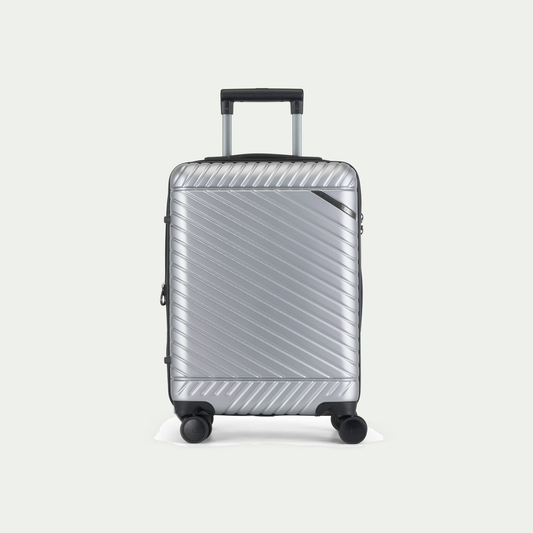
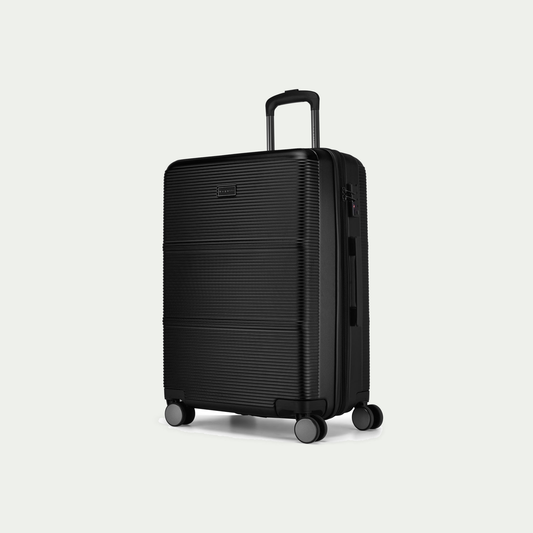
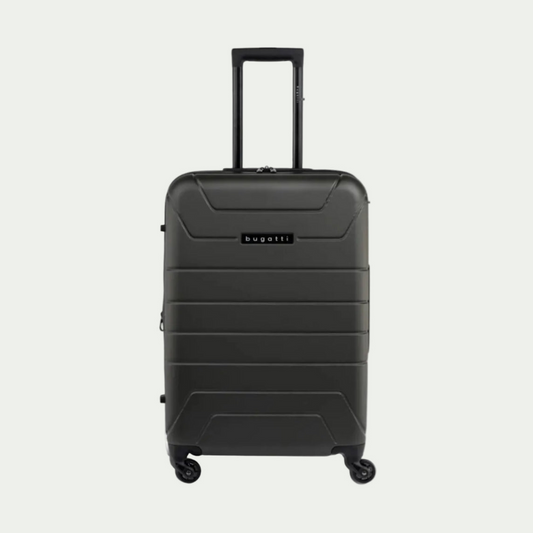
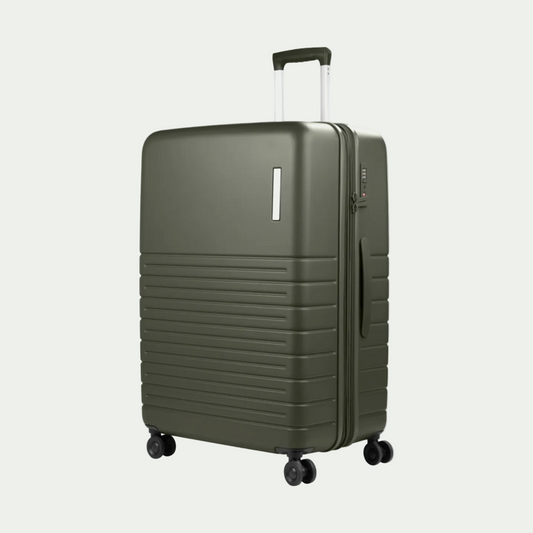
Current ÉVORA examples include the Bugatti Oslo 20" Polycarbonate Carry-On, the Bugatti Oslo 24" Medium Checked Luggage and the Bugatti Birmingham 28" Polycarbonate Checked Luggage.
Who should choose polycarbonate?
- Frequent flyers who want a more structured hard-shell feel
- Travellers checking luggage regularly
- People willing to pay more for construction and hardware, not just the material name
- Travellers who prefer a shell that can absorb impact without feeling overly flexible
Polypropylene Luggage: Why Weight Is the Big Advantage
Polypropylene is a lower-density polymer than many other common rigid plastics. LyondellBasell lists many polypropylene grades around 0.90 g/cm³ and offers impact-copolymer formulations designed to balance stiffness and impact resistance.
For luggage, that gives manufacturers room to reduce empty shell weight while keeping useful structural performance. The result can feel more flexible in your hands than a polycarbonate case, but flexibility by itself is not evidence of poor quality.
The finished suitcase still matters more than the resin label. A lightweight shell with weak wheels or a loose handle is not a better travel product simply because the polymer is light.
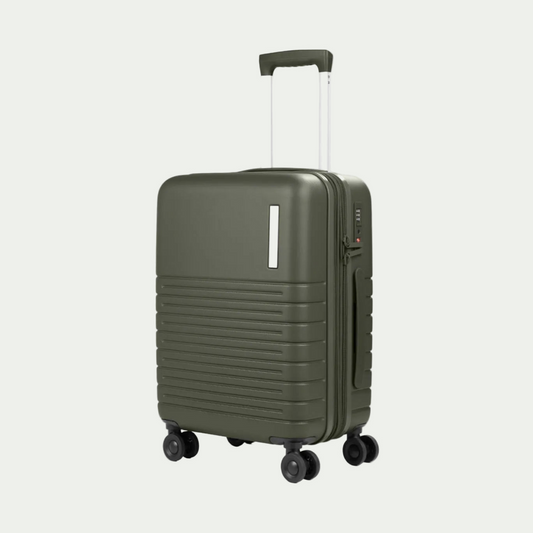
At ÉVORA, the Bugatti Osaka 24" Medium Checked Luggage is a current polypropylene example.
Who should choose polypropylene?
- Travellers who regularly approach airline baggage-weight limits
- People who value easier lifting and handling
- Travellers comfortable with a shell that may feel more flexible
- Anyone comparing finished suitcase weight very closely
ABS Luggage: What Lower Price Does — and Does Not — Mean
ABS is not simply “cheap plastic.” It is an engineering thermoplastic used across consumer, automotive and technical applications. INEOS Styrolution describes ABS grades with combinations of rigidity, surface quality and impact strength.
In luggage, ABS is often used in value-oriented hard-shell cases and in blended constructions. That can lower the retail price, but the finished result still depends on the grade, wall thickness, internal ribs and the quality of the rest of the suitcase.
ABS also appears in mixed-material shells. A manufacturer may combine ABS with polycarbonate to target a particular balance of cost, rigidity, finish and impact behaviour.
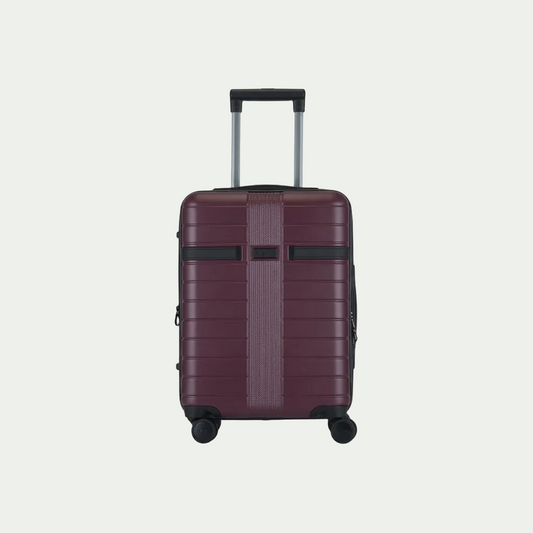
Current ÉVORA examples include the Bugatti Wellington 24" Medium Checked Luggage, which uses a polycarbonate composite and ABS mix, and the Bugatti Brussels 24" Medium Checked Luggage. The Bugatti Brussels Carry-On is another current hard-shell option in the same product family.
Who should choose ABS or an ABS blend?
- Travellers who want hard-shell protection at a lower entry price
- Occasional travellers who do not need the most premium shell construction
- Shoppers comparing value across the whole suitcase, not only the resin name
- People who find a well-built mixed-material case with strong wheels and hardware
Which Material Is Most Durable?
There is no responsible one-word answer.
Polycarbonate has a strong reputation for impact performance, and certain polypropylene impact-copolymer grades are engineered specifically for stiffness/impact balance. ABS grades also vary widely in impact performance. The test data published by polymer manufacturers make the same point: grade and formulation matter.
For a finished suitcase, durability also depends on whether impacts are concentrated around the wheel housings, corners, zipper track and telescopic-handle mount. Those failure points are not explained by the shell material alone.
Which Material Is Lightest?
As a raw material, polypropylene is notably low in density, which is why it is attractive for lightweight designs. But a finished polypropylene suitcase is not guaranteed to be lighter than every ABS or polycarbonate suitcase.
Compare the actual empty weight on the product page. Frame construction, reinforcement, wheels, lining and expanders can erase or amplify the material advantage.
If baggage weight is a recurring problem, also read How to Avoid Overweight Baggage Fees.
Which Material Scratches Less?
This is one of the easiest luggage claims to oversimplify.
Visible scratching depends on surface texture, gloss level, coating, colour, embossing and how the bag is handled. A matte textured shell can hide wear better than a glossy shell made from the same polymer.
For that reason, it is more accurate to judge the finish of the specific suitcase than to rank ABS, polycarbonate and polypropylene universally by scratch resistance.
What About Cold Weather?
Polymer behaviour at low temperature depends strongly on grade and formulation. Some polycarbonate grades retain strong impact performance at low temperatures, while polypropylene and ABS are available in both standard and impact-modified formulations with different low-temperature behaviour.
For ordinary travel, the more useful lesson is not to assume that every suitcase made from the same polymer will behave identically in winter. Finished construction and the exact resin formulation matter.
So Which One Should You Buy?
Choose polycarbonate when impact performance, a more structured shell and frequent-travel use are high priorities.
Choose polypropylene when keeping empty weight low and having a more flexible shell matter most.
Choose ABS or an ABS blend when value matters and the specific suitcase has solid wheels, handle construction and overall build quality.
Then compare the parts that often matter more in daily use: wheel quality, handle stability, dimensions, empty weight, organization and warranty.
If you are still deciding on size, read What Size Suitcase Do I Need? A Guide for 3, 7, 10 & 14-Day Trips. If you are choosing between shell types more broadly, see Hard Shell vs Soft Shell Luggage. For cabin bags, remember that the complete exterior dimensions matter; see Do Wheels Count in Carry-On Size?.
Explore ÉVORA Luggage
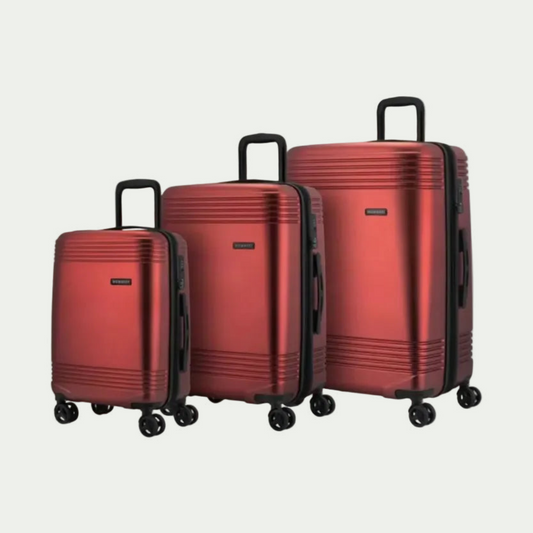
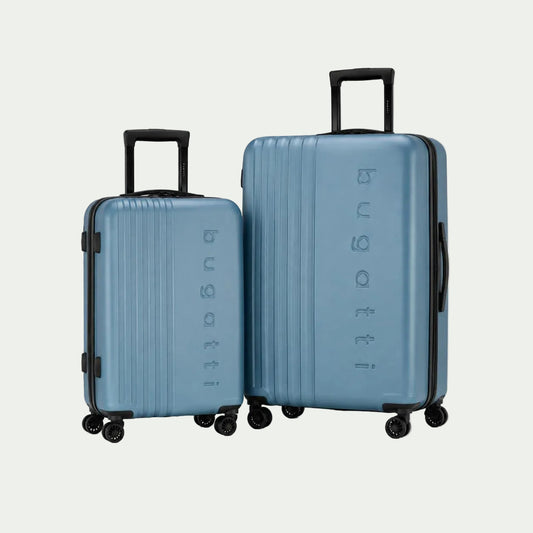
Compare current carry-on luggage, 24" checked luggage, 28" checked luggage and sets, or browse all ÉVORA luggage.
Material Sources
Material properties were verified against current manufacturer information from Covestro Makrolon polycarbonate, LyondellBasell polypropylene impact copolymers, and INEOS Styrolution Lustran ABS. Exact properties vary by grade, formulation and test method.