Do Wheels Count in Carry-On Size? What Airlines Measure
Oleksii PanchenkoYes. Wheels count toward carry-on size when the airline measures the bag’s full exterior dimensions. Fixed handles, feet, corner guards and any other protruding parts can matter too. The safest rule is simple: measure the suitcase from its outermost points, not just the shell.
This is where travellers often get caught out. A suitcase body can look compliant on paper, but the spinner wheels and top structure may push the complete bag beyond the airline’s limit.
Do Wheels Count in Carry-On Size?
Yes. Air Canada explicitly states that its standard carry-on maximum of 55 × 40 × 23 cm (21.5 × 15.5 × 9 in) includes wheels and handles. WestJet currently lists a maximum carry-on size of 56 × 36 × 23 cm (22 × 14 × 9 in) and requires the bag to comply with its sizing rules. Airline policies can change, so always check the operating carrier before travel.
The practical takeaway is that the airline cares about the complete bag that has to fit the permitted space or sizing device—not the shell height printed in a product name.
Body Size vs Overall Size
A “21-inch” or “22-inch” suitcase label does not automatically tell you the bag’s airline-ready exterior size.
Manufacturers may describe luggage differently. A nominal size can refer to the shell, a product family or another internal naming convention. What matters for cabin compliance is the bag’s actual outside measurement.
For example, a shell that is 52 cm tall can end up several centimetres taller once the wheels and top structure are included.
What Parts Should You Include?
When checking carry-on dimensions, measure every fixed part that contributes to the outside profile:
- wheels;
- fixed top and side handles;
- protective feet;
- corner guards;
- exterior pockets;
- hard trim or other protrusions;
- expanded sections if you plan to travel with the suitcase expanded.
Think in terms of the bag’s maximum exterior height, width and depth.
Do Telescopic Handles Count?
Measure the suitcase with the telescopic handle fully retracted.
You do not measure the handle while it is extended for pulling. However, the handle housing and any fixed part that remains above or outside the shell when the handle is collapsed still contributes to the bag’s exterior size.
How to Measure a Carry-On With Wheels in 60 Seconds
- Stand the suitcase upright on a flat floor.
- Retract the telescopic handle completely.
- Measure height from the floor/bottom of the wheels to the highest fixed point.
- Measure width across the widest outside point.
- Measure depth from front to back at the deepest outside point.
- Measure it as packed. Soft-sided bags and front pockets can become deeper when full.
- Compare all three measurements with the operating airline’s current published limit.
Do not press fabric, pockets or the shell inward to create a smaller measurement. Measure the suitcase in the condition you actually expect to take to the airport.

What About Expandable Carry-Ons?
Expansion is a separate issue from wheel height, but it can create the same problem.
A suitcase may fit the airline’s depth limit with the expansion zipper closed and exceed it once expanded. If you plan to travel with the expansion open, measure the bag again in that configuration.
For cabin travel, the safest habit is to keep expansion closed unless you have verified that the expanded depth still fits the airline’s current rule.
Can an Airline Reject a Bag Because of the Wheels?
If the wheels push the complete bag beyond the carrier’s permitted dimensions or prevent it from fitting the sizing device, the bag can be treated as oversized carry-on baggage.
Air Canada says oversized carry-on bags are not permitted and that bags must fit its verification device. WestJet states that carry-on baggage outside its applicable size limits can be required to travel as checked baggage.
That does not mean every bag is measured on every trip. It means the traveller should not rely on the assumption that wheels will be ignored.
How Much Height Do Wheels Add?
There is no useful universal number.
Some spinner assemblies are partly recessed into the lower corners. Others sit farther below the shell. Measuring your exact suitcase is more reliable than subtracting or adding a generic wheel allowance.
Should You Buy a Carry-On Right at the Maximum?
Not necessarily.
A little margin can be useful because packing, expansion, shell curvature and exterior pockets can affect the final dimensions. A suitcase that sits slightly below your airline’s limit can be easier to use across different trips than one that reaches every maximum dimension exactly.
Use the Right Guide for the Right Question
This article answers one narrow question: do wheels count?
If you want the full measuring process, including handles, packed depth and expansion, use our How to Measure a Carry-On Correctly guide.
If you need current examples from major Canadian carriers, see the Canadian Carry-On Luggage Size Guide.
If you are still deciding between carry-on, medium and large luggage, see What Size Suitcase Do I Need?.
Choosing a Carry-On at ÉVORA
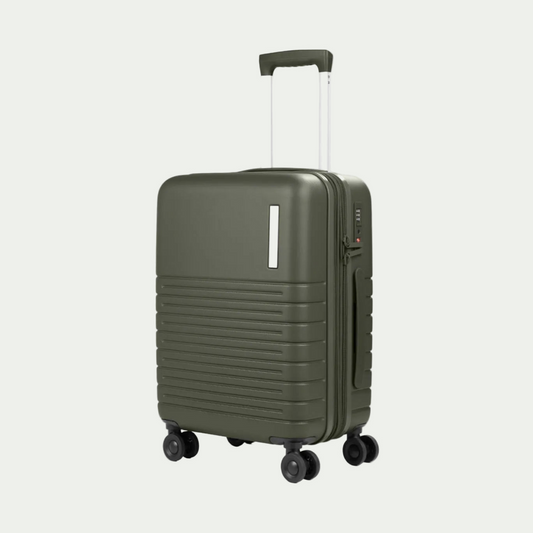
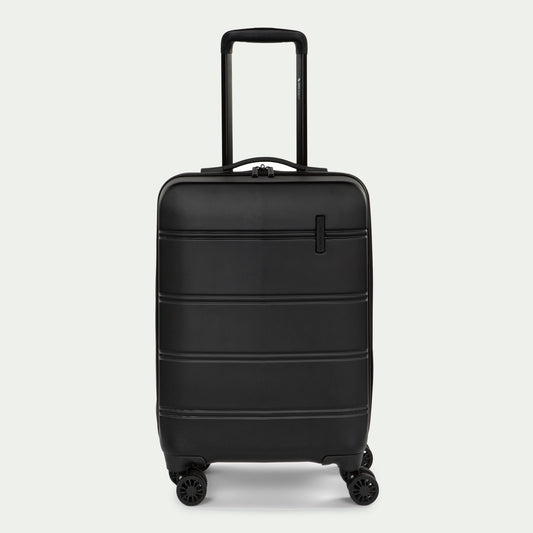
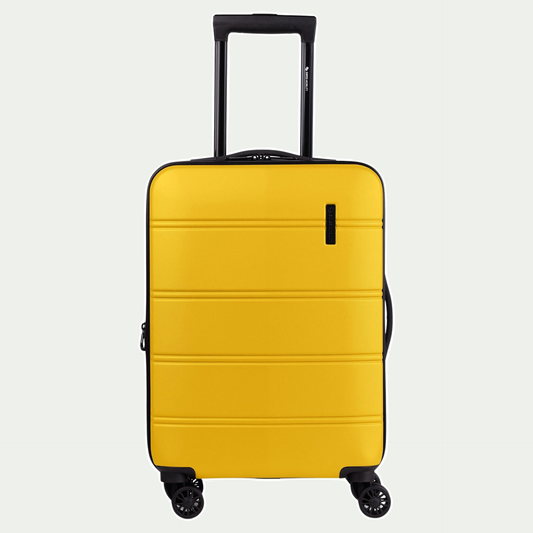
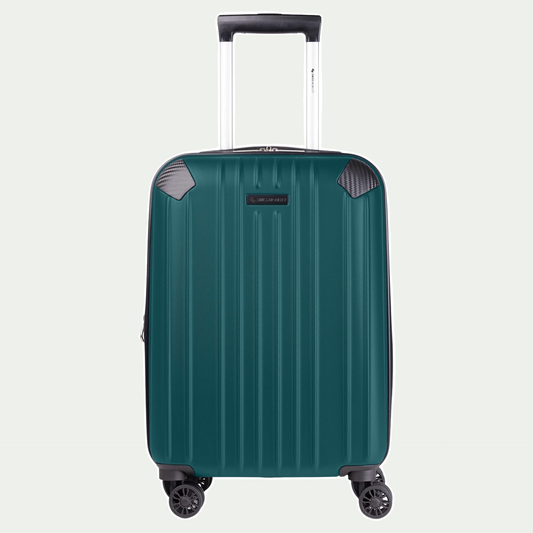
When comparing carry-ons, look at the complete exterior dimensions rather than the product nickname alone.
Explore ÉVORA carry-on luggage →
What to Check Before You Fly
- verify the operating airline’s current carry-on dimensions;
- check whether your fare actually includes a standard carry-on;
- measure wheels and fixed handles as part of the exterior size;
- measure packed depth, especially for soft-sided or expandable luggage;
- check personal-item rules separately;
- leave a little margin if you regularly fly different airlines.
Airline requirements can change — always verify current requirements with your carrier before travel.
Frequently Asked Questions
Do wheels count in carry-on size on Air Canada?
Yes. Air Canada explicitly says that wheels and handles are included in its published carry-on dimensions.
Do spinner wheels count as part of suitcase height?
Yes. Measure from the bottom of the wheels to the highest fixed point of the suitcase.
Does the telescopic handle count?
Measure with the telescopic handle fully retracted. Any fixed housing or structure that still protrudes in that position contributes to the exterior measurement.
Does an expandable carry-on count at its expanded depth?
If you plan to use the bag expanded, compare the expanded depth with the airline’s limit. Expansion can make a previously compliant bag too deep.
Is a 22-inch carry-on always airline compliant?
No. “22-inch” is not a universal airline standard. Check the actual exterior height, width and depth—including wheels and fixed handles—against the operating carrier’s current rules.
Final Takeaway
Yes—wheels count toward carry-on size when the airline assesses the suitcase’s full exterior dimensions.
Measure from the bottom of the wheels to the highest fixed point, then check the bag’s widest width and deepest packed point. Do not rely on a “20-inch,” “21-inch” or “22-inch” label alone.
Sources & Methodology
This article was materially reviewed and updated on September 29, 2026. Airline baggage rules are time-sensitive, so ÉVORA checks airline-specific claims against current official carrier information and recommends that travellers verify the operating carrier again before departure.