Hard Shell vs Soft Shell Luggage: Which Is Better for You?
Updated Oleksii PanchenkoShare
Neither hard shell nor soft shell luggage is better for everyone.
Choose hard shell luggage if you value structure, easier cleaning, resistance to compression and a streamlined suitcase exterior. Choose soft shell luggage if you value exterior pockets, flexible packing and quick access to items without opening the entire case.
For many travellers, the decision comes down to one question: do you care more about structure and protection, or access and flexibility?
Hard Shell vs Soft Shell Luggage at a Glance
| Feature | Hard Shell | Soft Shell |
|---|---|---|
| Structure | Rigid, keeps its shape | Flexible |
| Compression protection | Better | Lower |
| Exterior pockets | Uncommon | Common |
| Packing flexibility | More structured | More forgiving |
| Easy cleaning | Usually easier | Depends on fabric |
| Light rain / splashes | Shell resists absorption | Depends on fabric/coating |
| Fragile items | Better external barrier | Requires more careful packing |
| Quick-access storage | Limited | Usually better |
| Best for | Protection, checked luggage, easy maintenance | Access, flexibility, irregular items |
The quality of the actual suitcase still matters more than the category alone. A well-built soft case can outperform a poor hard case, and vice versa.
What Is Hard Shell Luggage?
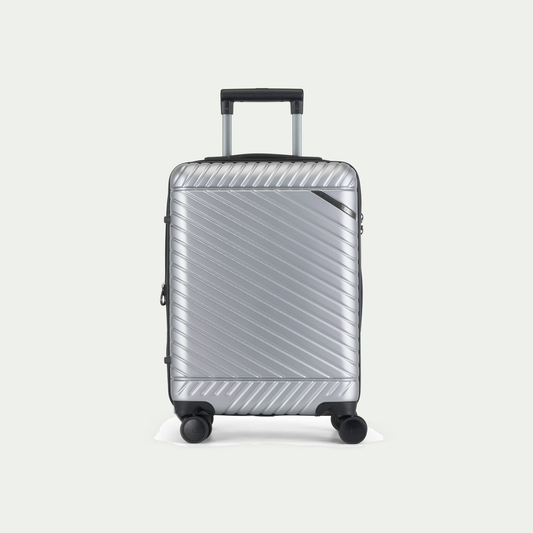
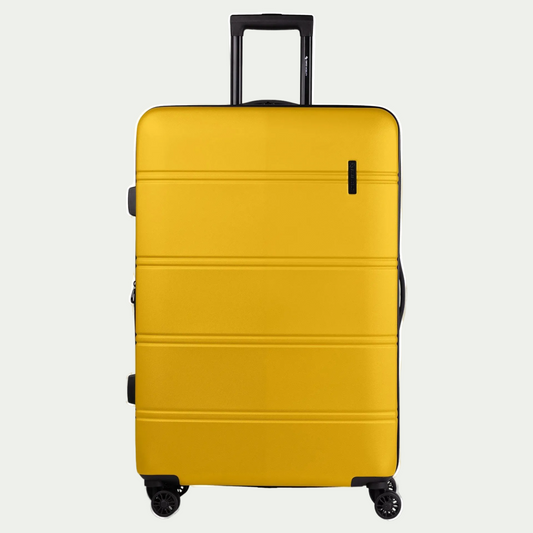
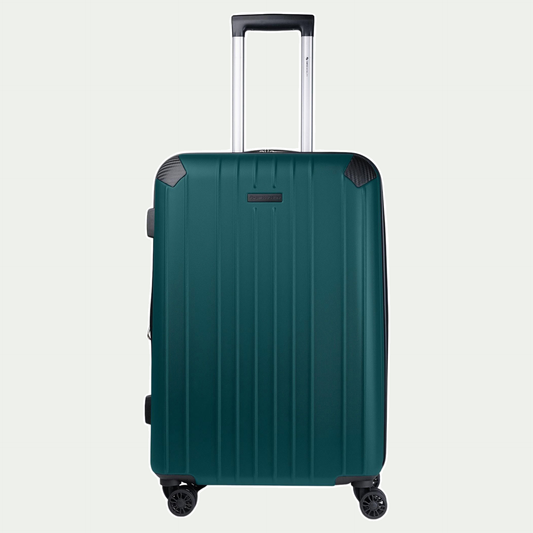
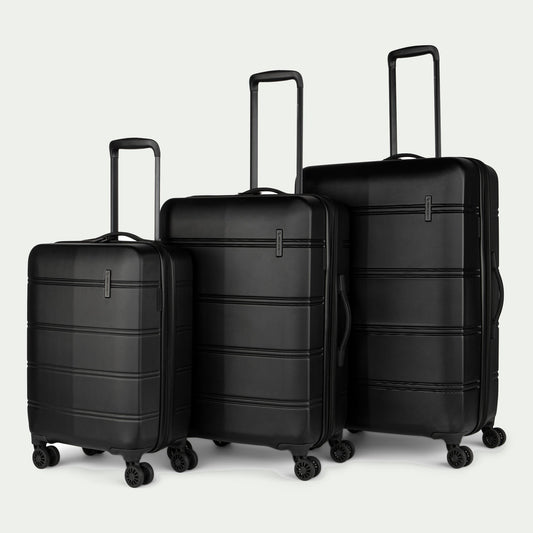
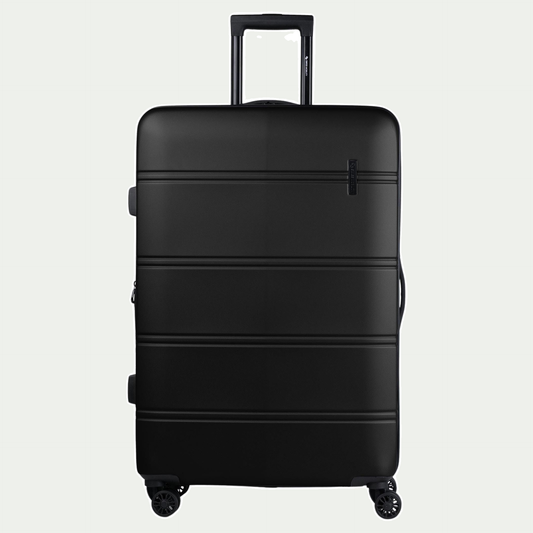
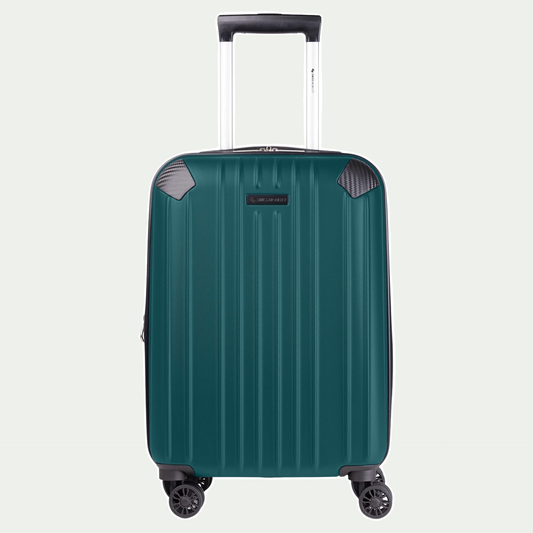
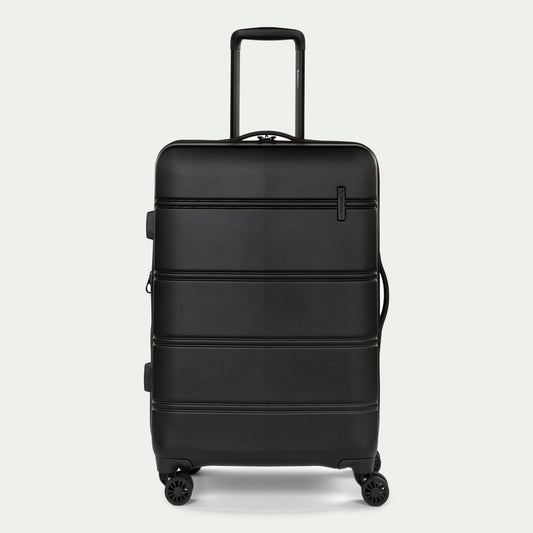
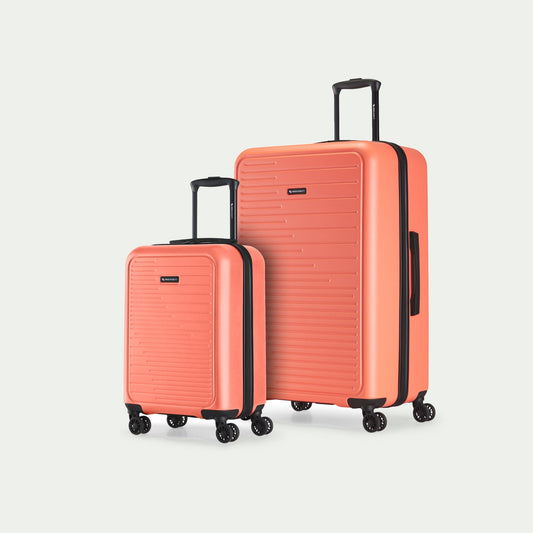
Hard shell luggage uses a structured exterior made from materials such as polycarbonate, polypropylene or ABS. Instead of fabric forming the outside of the suitcase, the shell itself creates its shape.
This produces a more rigid case that is less easily compressed when other luggage is placed around it.
If you want to understand how individual hard-shell materials differ, see our ABS vs Polycarbonate vs Polypropylene luggage guide.
Main advantages of hard shell luggage
- a structured case that keeps its shape;
- additional protection against external pressure;
- an exterior that is usually easy to wipe clean;
- a modern, streamlined appearance;
- less exposed fabric;
- predictable packing space.
The rigid exterior can be particularly useful for checked luggage because the case is less likely to collapse inward when other bags press against it.
That does not make fragile belongings impact-proof. Electronics, glass and delicate souvenirs still need proper padding inside the suitcase.
What Is Soft Shell Luggage?
Soft shell luggage usually uses woven materials such as polyester or nylon. The fabric exterior gives the suitcase more flexibility than a rigid shell.
That flexibility can be useful when you pack irregular objects, need exterior compartments or want a little more forgiveness when the suitcase is nearly full.
Main advantages of soft shell luggage
- exterior pockets;
- quick access to documents or small items;
- slightly more flexible packing;
- easier accommodation of awkward shapes;
- a more traditional suitcase layout.
If you frequently reach for a jacket, charger, book or document while travelling, exterior storage can be a significant advantage.
Which Protects Your Belongings Better?
For protection against compression and external pressure, hard shell luggage generally has the advantage.
The rigid shell creates a more structured barrier around your belongings. That can matter when checked luggage is placed beneath other suitcases or handled repeatedly during a journey.
Soft shell luggage absorbs pressure differently. Because the exterior can flex, force can transfer more easily toward what is packed inside.
For either style, place fragile objects away from the outer edges, surround delicate items with clothing or padding, avoid leaving empty space that allows objects to move, and keep genuinely valuable or irreplaceable items with you whenever possible.
Which Is Better for Checked Luggage?
For travellers who regularly check their suitcase, hard shell is often the more practical choice when protection and easy maintenance are priorities.
Checked bags can be stacked, moved on conveyor systems, placed against other luggage and exposed to dirty or wet surfaces. A structured shell can help prevent compression, while the exterior is generally easier to wipe down after the trip.
Soft shell checked luggage can still work extremely well, particularly if it is made from durable fabric with strong seams, reinforced corners and quality zippers.
If you check clothing almost exclusively, either format can work. If you often pack items that benefit from structure, hard shell becomes more attractive.
Which Is Better for Carry-On Luggage?
The answer becomes much closer for carry-ons.
A hard-shell carry-on works well if you want structured packing, prefer a clean exterior, rarely use exterior pockets and travel with a separate personal item for documents and technology.
A soft-shell carry-on may be more convenient if you frequently need quick access to items, use an exterior laptop or document pocket, pack irregularly shaped objects or like some flexibility near the top of the bag.
For cabin luggage, dimensions often matter more than shell type. Whatever you choose, measure the full exterior—including wheels and fixed handles—against your airline's current allowance.
Our How to Measure a Carry-On Correctly guide explains the process.
Which Is Better for Overpackers?
Soft luggage usually offers more physical flexibility. The fabric can sometimes accommodate an awkward item or slightly fuller load more easily than a rigid shell.
But that is not necessarily an advantage. Overpacking can create excess weight, stressed zippers, distorted dimensions and a harder suitcase to manoeuvre.
A hard shell's fixed structure can actually help some travellers pack more deliberately.
Hard Shell vs Soft Shell for Weight
Do not assume that soft automatically means lighter.
Modern hard-shell luggage can be surprisingly lightweight, and some heavily constructed soft cases can weigh more than comparable hard cases.
Empty suitcase weight depends on the entire construction: shell or fabric, frame, wheels, handles, zippers, dividers, reinforcement, expansion systems and additional features.
When comparing two suitcases, compare their actual empty weight, not simply hard vs soft.
Which Handles Rain Better?
Hard shell luggage generally has an advantage in light rain or splashes, because the shell itself does not absorb water like untreated fabric.
But hard shell luggage is not automatically waterproof. Moisture can still enter through zippers, seams, openings or damaged areas.
Soft luggage varies greatly. Some fabrics and coatings offer strong water resistance; others absorb moisture much more easily.
Which Is Easier to Clean?
For routine travel dirt, hard shell is usually easier to clean. The exterior can often be wiped with a damp cloth.
Soft luggage may need brushing, spot cleaning, fabric-safe cleaner and more time to dry.
Which Is More Durable?
There is no honest universal winner.
Hard and soft luggage fail in different ways.
Hard shell wear can include:
- scratches;
- dents;
- stress around corners;
- shell cracking in lower-quality or unsuitable materials;
- damage around wheels or handles.
Soft shell wear can include:
- abrasion;
- torn fabric;
- damaged seams;
- worn corners;
- stretched pockets;
- zipper stress.
In both categories, long-term durability depends heavily on construction quality. Look beyond the shell and evaluate wheel mounting, handle stability, zipper quality, corner reinforcement, stitching, interior construction and warranty.
A durable suitcase is a complete system—not just a material.
What About Scratches and Appearance?
Hard cases may show surface scuffs and scratches more visibly, especially on smooth or glossy finishes.
Soft cases tend to show wear differently, often through fabric abrasion, dirt or staining.
Neither stays perfect forever if it travels frequently. If appearance matters to you, texture and finish can be as important as shell category.
Which Gives You More Packing Space?
This depends on the design.
Hard shell luggage usually provides more defined capacity: you know roughly where the limit is.
Soft shell luggage may allow slightly more flexibility around unusual shapes, depending on its construction.
If you need significantly more room, choosing the correct suitcase size is more effective than repeatedly forcing a smaller case beyond its intended capacity.
See What Size Suitcase Do I Need? for our 3-, 7-, 10- and 14-day framework.
What About Exterior Pockets?
This is one of the clearest advantages of soft shell luggage.
Many soft cases provide front compartments for travel documents, tablets, chargers, books, jackets and smaller accessories.
Most traditional hard cases open from the middle and provide little or no exterior storage.
A simple solution for hard-shell travellers is to use a personal item, tote or backpack for anything needed during the journey.
Does Hard Shell Luggage Crack?
It can, but “hard shell luggage cracks” is too broad to be useful.
Different hard-shell materials behave differently. Polycarbonate, polypropylene and ABS have different combinations of rigidity, flexibility, weight, price and impact behaviour. Construction quality matters as well.
For the detailed material comparison, read ABS vs Polycarbonate vs Polypropylene: What You're Really Paying For.
Can Soft Shell Luggage Tear?
Yes, but again, construction matters.
Fabric can be damaged by sharp objects, abrasion or stress around seams and zippers. Higher-quality fabrics, reinforcement and good stitching can substantially improve performance.
Hard Shell Is Probably Better for You If…
- you regularly check luggage;
- you want stronger resistance to compression;
- you carry items that benefit from a structured case;
- you like an exterior that is easy to wipe clean;
- you prefer a clean, modern appearance;
- you use a separate personal item for quick-access belongings;
- you prefer defined packing limits.
Soft Shell Is Probably Better for You If…
- you rely heavily on exterior pockets;
- you frequently need quick access to small items;
- you pack irregularly shaped belongings;
- you appreciate some exterior flexibility;
- you prefer traditional suitcase construction;
- you value access more than a rigid exterior.
Hard Shell vs Soft Shell by Traveller Type
| Traveller | Better starting point | Why |
|---|---|---|
| Frequent checked-bag traveller | Hard shell | Structure + easy cleaning |
| Business traveller | Either | Depends on laptop/document access |
| Carry-on-only traveller | Either | Access vs structure is the main trade-off |
| Traveller with fragile items | Hard shell | Better external compression barrier |
| Overpacker | Soft shell, cautiously | More flexibility, but weight still matters |
| Multi-city traveller | Whichever is lighter/easier to move | Mobility matters more than shell |
| Traveller who wants exterior pockets | Soft shell | Clear advantage |
| Traveller who dislikes fabric stains | Hard shell | Easier routine cleaning |
So, Which Is Better: Hard Shell or Soft Shell?
There is no single winner.
Hard shell is the better fit when you prioritize structure, compression protection, easy cleaning and a streamlined exterior.
Soft shell is the better fit when you prioritize flexible packing, exterior pockets and quick access.
Instead of asking “Which luggage type is better?”, ask: Which trade-offs matter on the trips I actually take?
Choosing Luggage at ÉVORA
ÉVORA's approach is not to sell you the largest suitcase or the most complicated feature list. The goal is to match your luggage to the way you travel.
If a structured suitcase fits your priorities, you can browse ÉVORA luggage and compare materials, sizes and configurations.
If you are still deciding on capacity first, start with our suitcase-size guide before choosing the shell style.
What to Check Before You Buy
- actual suitcase weight;
- exact exterior dimensions;
- shell or fabric material;
- wheel quality;
- handle construction;
- zipper quality;
- expansion;
- internal organization;
- exterior pockets;
- warranty;
- how often you check luggage;
- what you normally pack.
For carry-on luggage, also verify the operating airline's current dimensions and fare allowance before travel.
Airline requirements can change — always verify current requirements with your carrier before travel.
Frequently Asked Questions
Is hard shell luggage better than soft shell?
Not universally. Hard shell provides a structured exterior, easier cleaning and greater resistance to compression. Soft shell provides more flexibility and usually better exterior access. Your travel habits determine which advantage matters more.
Is hard shell luggage better for checked bags?
It can be particularly useful for checked luggage because the structured exterior resists compression and is generally easy to clean. However, overall construction quality still matters.
Which luggage type lasts longer?
There is no guaranteed winner. Hard shells and soft shells wear differently, and durability depends on material quality, wheels, handles, zippers, stitching and overall construction.
Is soft luggage lighter than hard luggage?
Not necessarily. Compare the actual empty weight of individual suitcases. Modern hard-shell cases can be very light.
Is hard shell luggage waterproof?
Usually not completely. The shell can resist light rain and splashes, but water can still enter through zippers, seams or openings.
Which is better for carry-on travel?
Both can work well. Hard shell offers structure; soft shell often provides exterior pockets and flexible access. Dimensions, empty weight and your personal-item setup are often more important.
Which is better for international travel?
Either can work. If your suitcase will be checked frequently or moved through multiple connections, a structured hard case may appeal more. If quick access and flexible packing matter more, soft shell may be preferable.
Final Takeaway
Choose hard shell for structure, protection against compression and easy maintenance. Choose soft shell for flexibility, exterior pockets and quick access.
Do not choose based on trend, appearance or the assumption that one construction is automatically superior. Choose the suitcase that removes the most friction from your trips.
Sources & Methodology
This guide was materially reviewed and updated on October 6, 2026. It compares luggage construction based on practical travel use rather than declaring one universal winner.
Hard-shell performance varies significantly by material, which is why ÉVORA treats ABS, polycarbonate and polypropylene separately in its dedicated material guide. Soft-shell performance likewise depends on fabric, coating, stitching and construction quality.
Before purchasing carry-on luggage, check the actual product dimensions and compare them with your operating carrier's current allowance.