What Size Suitcase Do I Need? A Guide for 3, 7, 10 & 14-Day Trips
Oleksii PanchenkoShare
For most travellers, a carry-on is enough for about 3–5 days, a 24-inch checked suitcase works well for roughly 7–10 days, and a 28-inch suitcase becomes useful for 10–14 days or trips with bulky clothing.
But trip length alone does not determine the right suitcase size. A seven-day summer trip with laundry access can require less space than a four-day winter trip with boots, sweaters and formal clothing. Your packing style, climate, footwear, special items and how often you move between locations can matter just as much as the number of nights.
The goal is not to choose the biggest suitcase you can take. It is to choose the smallest suitcase that comfortably fits the trip you are actually taking.
What Size Suitcase Do I Need? Quick Guide
| Trip length | Good starting point | Best for |
|---|---|---|
| 2–3 days | Carry-on | Weekends, business trips, city breaks |
| 4–5 days | Carry-on | Light packers, warm weather, simple itineraries |
| 6–7 days | Carry-on or 24" checked | Depends on season, shoes and laundry |
| 7–10 days | 24" checked | Most one-week-plus trips |
| 10–14 days | 24" or 28" checked | Longer vacations and higher-volume packing |
| 14+ days | 28" checked or a luggage combination | Long stays, winter trips, family travel |
These are starting points, not airline rules. A minimalist traveller may stay in a carry-on much longer. Someone travelling in winter, attending a wedding or carrying specialty equipment may need checked luggage much sooner.
What Size Suitcase for a 3-Day Trip?
For most three-day trips, start with a carry-on.
A cabin-size suitcase usually gives enough room for two or three outfits, underwear and sleepwear, one additional pair of shoes, compact toiletries, and basic tech and travel essentials.
A carry-on is especially useful for a weekend because it keeps the trip simple. You avoid moving a larger suitcase through taxis, trains, hotel entrances and city streets, and depending on your ticket, you may also avoid checking luggage altogether.
A 3-day carry-on works best when:
- the weather is relatively predictable;
- you do not need formal clothing;
- you are packing for one person;
- you can limit footwear;
- you are comfortable repeating or combining clothing.
If your trip involves a wedding, winter boots, sports equipment or several outfit changes, the number of days becomes less important than the actual volume you need.
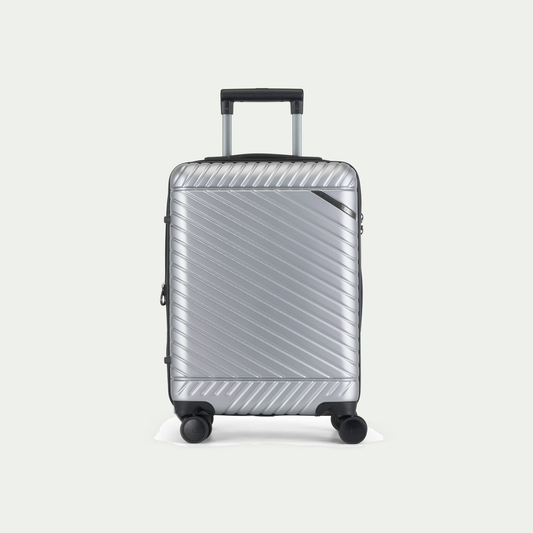
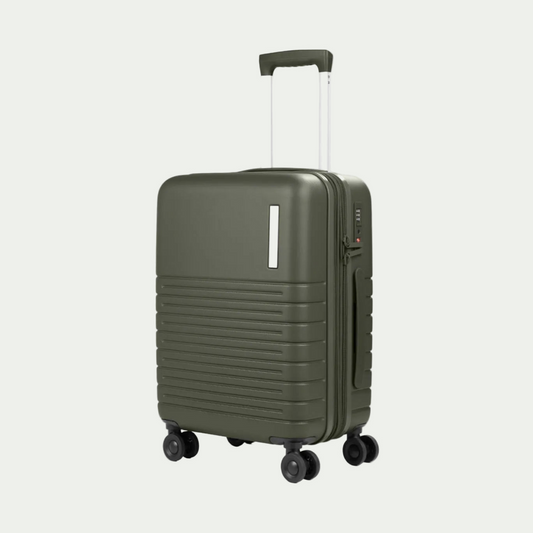
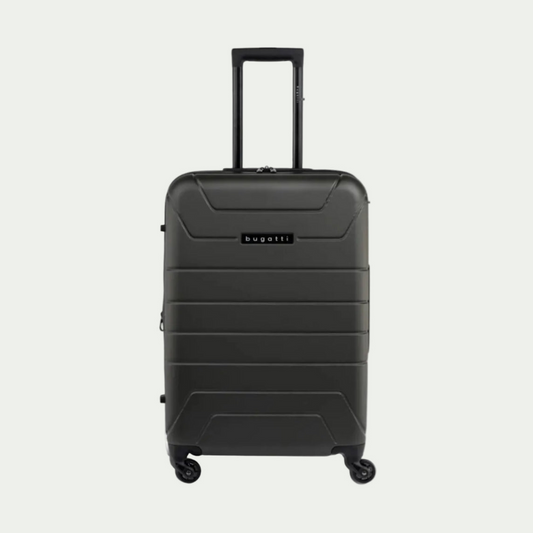
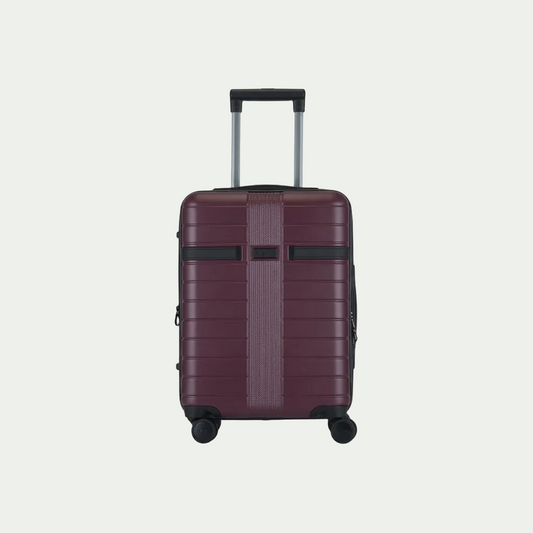
Explore ÉVORA carry-on luggage.
What Size Suitcase for a 7-Day Trip?
A seven-day trip is where the answer becomes less automatic. For many travellers, the choice is between a well-packed carry-on and a 24-inch checked suitcase.
Choose a carry-on for 7 days when:
- you are travelling somewhere warm;
- laundry is available;
- your wardrobe mixes easily;
- you can limit yourself to one or two pairs of shoes;
- you prefer mobility over extra outfit options.
Choose a 24-inch suitcase for 7 days when:
- you are travelling in colder weather;
- you want several outfit options;
- you need multiple pairs of shoes;
- you have formalwear;
- you are carrying larger toiletries;
- you do not want to compress everything into a cabin bag.
Being able to fit everything into a carry-on does not automatically mean that carry-on is the best choice. If cabin-only packing creates constant compromises, a medium checked suitcase may make the trip easier.
Our Carry-On vs Checked Baggage guide goes deeper into that decision.
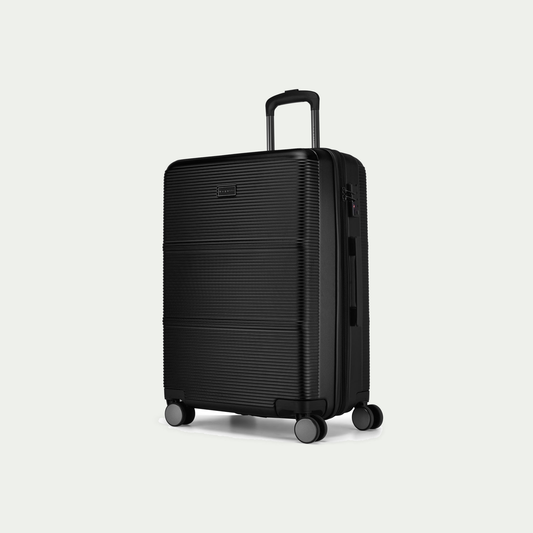
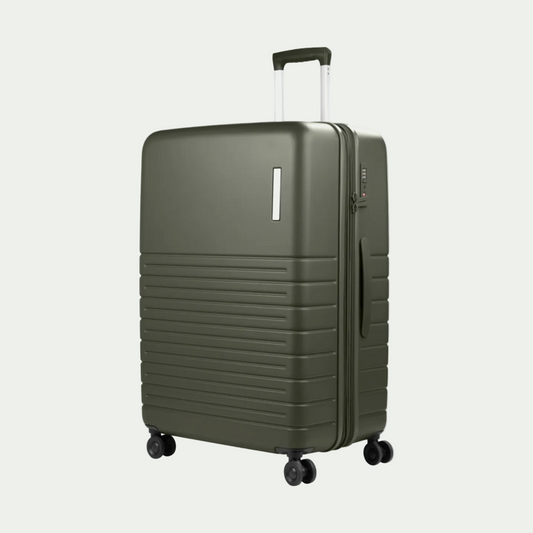
Explore 24-inch checked luggage.
What Size Suitcase for a 10-Day Trip?
For approximately ten days, a 24-inch checked suitcase is a strong starting point for most travellers.
It provides substantially more room than a carry-on while remaining easier to manage than a very large suitcase. It makes sense when you need a larger clothing rotation, several footwear options, full-size toiletries, space for different activities, or some room for purchases on the return trip.
But you may still be able to travel with a carry-on if you have access to laundry and build your wardrobe around repeatable combinations.
Think beyond the number of days
Compare a 10-day warm-weather city trip with laundry access to a seven-day Canadian winter trip. The ten-day trip may actually require less suitcase space.
That is why climate and clothing volume should modify your suitcase-size decision.
What Size Suitcase for a 14-Day Trip?
For a two-week trip, most travellers should start by considering either a 24-inch or 28-inch checked suitcase.
A 24-inch suitcase can still work for 14 days if:
- laundry is available;
- the climate is warm;
- you pack a capsule wardrobe;
- you limit footwear;
- you prefer a smaller, more mobile suitcase.
A 28-inch suitcase makes more sense if:
- you are travelling in winter;
- you need multiple clothing categories;
- you are packing formalwear;
- you are travelling with children;
- you expect to shop;
- you have little or no laundry access;
- capacity matters more than portability.
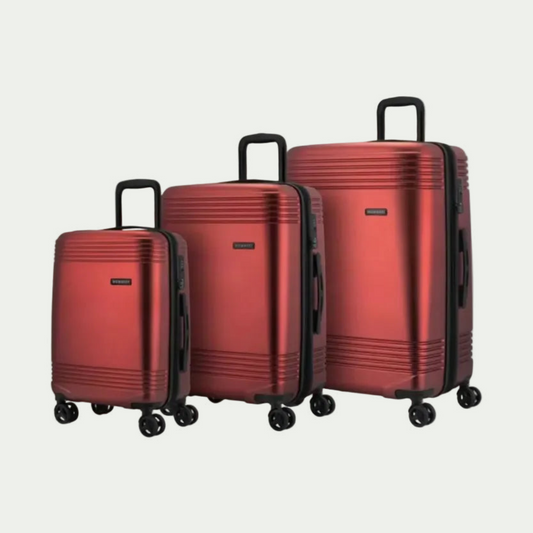
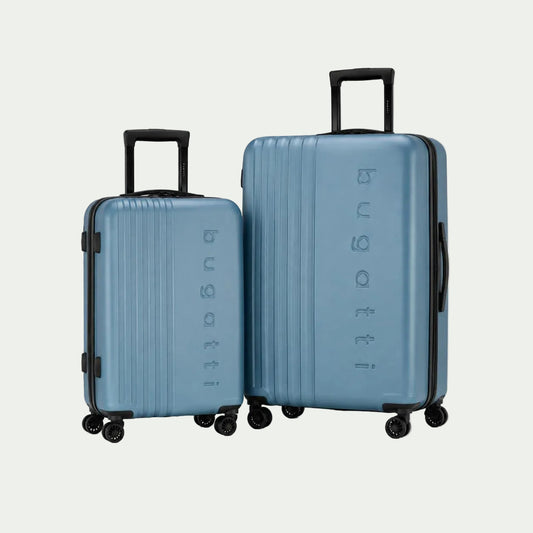
Explore 28-inch checked luggage and sets.
Carry-On vs 24-Inch vs 28-Inch: Which Should You Choose?
| Size | Main advantage | Main trade-off |
|---|---|---|
| Carry-on | Maximum mobility and simplicity | Limited capacity |
| 24" checked | Balance of capacity and manoeuvrability | Must be checked on most flights |
| 28" checked | Maximum packing space | Easier to overpack and harder to move |
There is no universal “best” suitcase size. The better question is: Which size removes the most friction from the kind of trips I actually take?
Climate Can Change the Answer Completely
Cold-weather clothing uses substantially more volume than summer clothing. A suitcase carrying a winter coat, sweaters, boots, thicker trousers and cold-weather accessories can fill surprisingly quickly.
That means someone travelling for five winter days may need more luggage than someone travelling for ten summer days.
Laundry Access Can Make a Smaller Suitcase Work
If you can wash clothing halfway through a ten-day trip, you do not necessarily need ten separate days of clothing. A smaller wardrobe built around pieces that work together can dramatically reduce required suitcase volume.
This becomes especially useful for longer, multi-city trips where manoeuvring a large suitcase repeatedly may create more inconvenience than repeating outfits.
Shoes Usually Consume More Space Than Travellers Expect
Footwear is one of the fastest ways to outgrow a suitcase. A practical packing rule is to ask whether each additional pair genuinely serves a different purpose: walking shoe, dress shoe, destination-specific shoe.
Once you start packing several “just in case” pairs, the suitcase category may change quickly.
Special Events Can Require a Larger Suitcase
A four-day wedding trip can need more space than a seven-day casual vacation. Formal clothing often adds structured garments, additional shoes, accessories, grooming products and clothing that should not be tightly compressed.
When your trip has a special purpose, choose the suitcase around that purpose rather than the number of nights.
Consider How Much You Will Move the Suitcase
Capacity matters at home. Mobility matters after you arrive.
A 28-inch suitcase may feel convenient while packing, but consider whether you will be climbing stairs, using public transportation, changing hotels, boarding trains, walking over uneven streets or fitting luggage into small rental cars.
For a single-resort vacation, a larger checked suitcase may be easy. For a multi-city itinerary, a smaller suitcase can be valuable even on a longer trip.
Leave Space for the Return Trip
Travellers often choose luggage based only on what they are bringing to the destination. Consider what you may bring back: clothing purchases, souvenirs, gifts, local products or additional work materials.
If you normally shop while travelling, leaving some unused capacity can be more useful than perfectly filling the suitcase before departure.
Should You Buy a Luggage Set?
A luggage set makes sense when your travel patterns vary throughout the year.
- Carry-on: weekends and short business trips.
- 24-inch: one-week vacations.
- 28-inch: longer, winter or higher-volume travel.
The value comes from choosing the right suitcase for each trip rather than forcing every journey into the same format. But you do not automatically need every size.
Do Not Choose Carry-On Size by “20-Inch” or “22-Inch” Alone
If you are considering cabin luggage, nominal product labels are not enough. Two suitcases sold as “22-inch carry-ons” can have different exterior dimensions because of wheel height, handles, shell shape, protective components and expansion systems.
Use the actual external height, width and depth.
Our How to Measure a Carry-On Correctly guide explains exactly how to measure wheels, handles and expandable sections.
You can also compare major carrier requirements in the Canadian Carry-On Luggage Size Guide.
A Better Way to Choose Your Suitcase
Instead of asking only “How many days am I travelling?”, ask these six questions:
- How many days am I away? Use this as your initial capacity estimate.
- What is the climate? Winter clothing can push you into a larger category quickly.
- Can I do laundry? Laundry can make a smaller suitcase practical for much longer trips.
- How many shoes and special items do I need? Footwear, formalwear and equipment change the calculation.
- How mobile is the itinerary? The more often you change location, the more valuable compact luggage becomes.
- What does my airline actually allow? A suitcase still has to comply with your carrier's current size, weight and fare rules.
What to Check Before You Fly
- verify your airline's current baggage allowance;
- check whether checked luggage is included with your fare;
- verify current size and weight limits;
- measure carry-on luggage including wheels and fixed handles;
- check personal-item rules separately;
- weigh your packed checked suitcase;
- leave some margin rather than packing exactly to the limit.
Airline requirements can change — always verify current requirements with your carrier before travel.
What Size Suitcase Should You Buy?
If you want the shortest possible answer:
For 2–5 days: start with a carry-on.
For about 7–10 days: consider a 24-inch checked suitcase.
For 10–14+ days or bulky travel: consider a 28-inch checked suitcase.
Then adjust down or up based on climate + laundry + footwear + special items + itinerary + packing style.
Explore ÉVORA Luggage by Size
Shop 24-Inch Checked Luggage →
Shop 28-Inch Checked Luggage & Sets →
Choose the smallest format that comfortably handles the real trip. More luggage is not automatically better travel.
Frequently Asked Questions
What size suitcase do I need for 7 days?
A carry-on can work for light packers, particularly in warm weather or with laundry access. A 24-inch checked suitcase is usually more comfortable if you need additional clothing, shoes or toiletries.
What size suitcase do I need for 10 days?
A 24-inch checked suitcase is a good starting point for most travellers. Minimalist travellers with laundry access may still be able to use a carry-on.
What size suitcase do I need for 2 weeks?
For approximately 14 days, consider a 24-inch or 28-inch checked suitcase. Climate, laundry access and footwear usually determine which one makes more sense.
Is a 24-inch suitcase big enough for one week?
For many travellers, yes. A 24-inch suitcase normally provides enough space for a week while remaining more manageable than a larger checked case.
Is a 28-inch suitcase too big?
Not necessarily. It can be useful for long trips, winter travel, family packing or trips with significant shopping. For short or highly mobile itineraries, however, it may create more capacity than you actually need.
Is carry-on luggage enough for a week?
It can be. Warm weather, laundry access and a compact wardrobe make one-week carry-on travel much easier. Cold weather, formalwear or several pairs of shoes can make checked luggage more practical.
Sources & Methodology
This guide was published on September 28, 2026 and is designed as a trip-planning framework, not an airline baggage allowance table. Trip-length recommendations are starting points based on practical luggage capacity and common travel scenarios rather than universal rules.
Because airline baggage limits, included allowances and fare conditions can change, ÉVORA recommends verifying current baggage requirements directly with your carrier before travel.