How to Measure a Carry-On Correctly: Wheels, Handles & Dimensions
Oleksii PanchenkoTo measure a carry-on correctly, measure the full exterior of the packed suitcase: height from the bottom of the wheels to the highest fixed point, width at the widest point, and depth from front to back at the deepest point. Include wheels, fixed handles, protective feet and any expanded sections.
Do not rely only on labels such as “20-inch,” “21-inch,” “22-inch” or “carry-on approved.” Airlines compare your bag with their own maximum exterior dimensions, and those limits are not identical.
For example, Air Canada currently uses 55 × 40 × 23 cm and explicitly includes wheels and handles, while WestJet currently uses 56 × 36 × 23 cm and requires the bag to fit its sizing device. Air Transat and Porter currently use 55 × 40 × 23 cm for a standard carry-on.
Airline requirements can change — always verify current requirements with your carrier before travel.
How to measure a carry-on in 30 seconds
- Pack the suitcase as you plan to travel with it.
- Stand it upright on a flat surface.
- Measure the total height: bottom of wheels → highest fixed point.
- Measure the width: widest exterior point from side to side.
- Measure the depth: deepest exterior point from front to back.
- Include wheels, fixed handles, bumpers and filled exterior pockets.
- If the suitcase is expandable, measure it in the exact configuration you plan to bring onboard.
- Compare all three measurements with your airline’s current baggage rules.
What carry-on dimensions actually mean
Airlines usually publish cabin-baggage dimensions as three exterior measurements, often shown as height × width × depth or in another order clearly labelled by the carrier.
A common Canadian example is:
55 × 40 × 23 cm
Those numbers describe the overall exterior suitcase, not just the packing shell.
A case body might be only 51 cm tall, for example, but spinner wheels and the top-handle housing can push the actual exterior height several centimetres higher.
That is why the full measurement matters more than the number printed in a product name.

Measure the full exterior: height from the bottom of the wheels to the highest point, width at the widest point, and depth from front to back at the deepest point.
Step 1: Measure the total height
Stand the suitcase upright on a hard, flat surface.
Measure from the lowest point of the wheels to the highest fixed point of the suitcase.
For most spinner luggage, that means starting at floor level and measuring to the top carry handle while the handle is folded down.
Do not measure only the hard shell or fabric body.
This is especially important because Air Canada explicitly states that its maximum carry-on dimensions include wheels and handles.
Step 2: Measure the width
Measure horizontally across the widest exterior point of the suitcase.
On many hard-shell cases this is the main shell, but side handles, protective bumpers or other components can extend beyond it.
If anything fixed protrudes farther than the shell, include it.
Step 3: Measure the depth
Measure from the front of the suitcase to the back at the deepest exterior point.
Depth is often the measurement travellers overlook, particularly with:
- expandable luggage;
- soft-sided cases;
- filled exterior pockets;
- overpacked bags.
A suitcase can meet an airline’s height and width limits and still be too deep.
Do wheels count in carry-on size?
Yes — include the wheels when measuring the full exterior suitcase.
Air Canada explicitly includes wheels and handles in its stated dimensions. WestJet requires the complete carry-on to fit its sizing device, and Air Transat specifies that wheels and handles are included for cabin-size musical instruments under the same carry-on dimensions.
For a four-wheel spinner, the difference between shell height and total height can be significant.

Shell height is not total height. Always compare the full exterior measurement with the airline’s limit.
Do handles count?
Fixed exterior handles and handle housings should be included.
For a telescopic handle, measure the suitcase while the handle is fully retracted. You do not need to measure the case with the telescopic handle extended.
However, any housing or structure that remains outside the case when the handle is retracted is part of the exterior measurement.
Should you measure the suitcase empty or packed?
For the most useful result, measure the suitcase after packing it.
This matters most with soft-sided luggage because fabric panels and exterior pockets can bulge after they are filled. Hard-shell luggage usually maintains its shape more consistently, but an overfilled expansion section can still increase the total depth.
Pack normally, close every zipper and measure the bag without squeezing or compressing it by hand.
How to measure expandable carry-on luggage
Measure an expandable suitcase in the exact configuration you intend to bring into the cabin.
An expandable carry-on might fit a 23 cm / 9 in depth limit while closed and exceed that limit after the expansion zipper is opened.
Expansion can still be useful for a checked return trip, road travel or extra space after you reach your destination. But if you intend to use the bag as cabin luggage, the expanded measurement is what matters.

Closed vs expanded: check the total depth again whenever the expansion section is open.
How to measure a soft-sided carry-on
Soft-sided luggage requires a little more attention because the bag can change shape after packing.
- Pack it as you intend to travel with it.
- Close every zipper.
- Fill exterior pockets only as you normally would.
- Do not compress the case with your hands while measuring.
- Measure the widest and deepest natural points.
If a front pocket bulges outward, that extra depth counts in practical airline sizing.
Why “22-inch carry-on” is not enough information
Terms such as 20-inch, 21-inch and 22-inch carry-on are useful product descriptions, but they are not universal airline standards.
Two bags both marketed as “22-inch carry-ons” can have different:
- wheel heights;
- handle housings;
- widths;
- depths;
- expansion systems.
The reliable method is to compare the manufacturer’s complete exterior measurements — or measurements you take yourself — with the rules published by your airline.
Canadian airline examples
The measurement method stays the same, but the maximum numbers can differ.
- Air Canada: 55 × 40 × 23 cm; wheels and handles included.
- WestJet: 56 × 36 × 23 cm; the bag must fit the sizing device and be liftable into the overhead bin without assistance.
- Air Transat: 55 × 40 × 23 cm for the standard carry-on maximum.
- Porter: 55 × 40 × 23 cm for a standard carry-on; baggage must fit the sizing units at check-in and the gate.
For a side-by-side comparison of current Canadian airline allowances and fare restrictions, use our Canadian carry-on luggage size guide.
Airline-specific carry-on guides
If you already know which carrier you are flying, go directly to the relevant guide:
- Air Canada carry-on size & baggage rules
- WestJet carry-on size & baggage rules
- Air Transat carry-on size & baggage rules
These pages cover fare-specific details that do not belong in a measuring guide.
What if your carry-on is very close to the limit?
If your suitcase measures exactly at the maximum, leave as much packing margin as possible.
Small changes caused by expansion, bulging pockets or soft-sided overpacking can push a bag beyond the permitted size.
A suitcase slightly below the maximum can be easier to use across multiple airlines than a bag designed to consume every available centimetre.
Choosing a carry-on at ÉVORA
When comparing cabin luggage, start with the actual exterior measurements rather than the model’s nominal “inch” size.
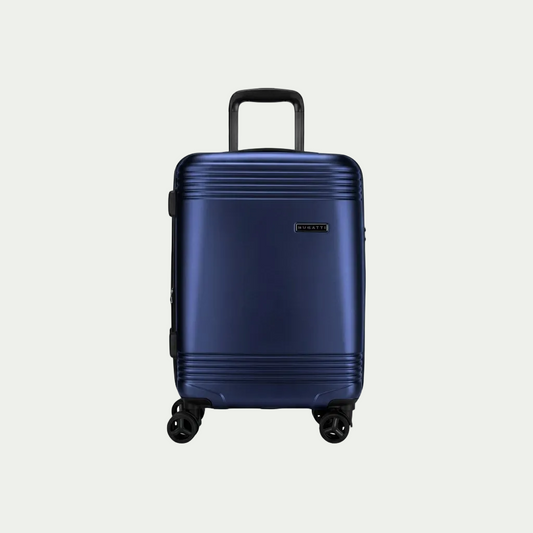
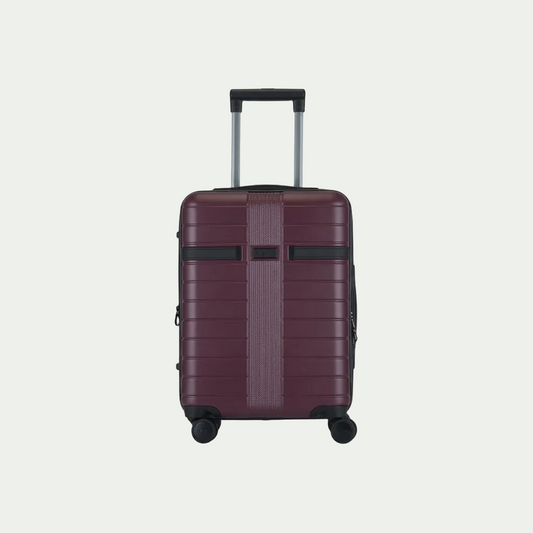
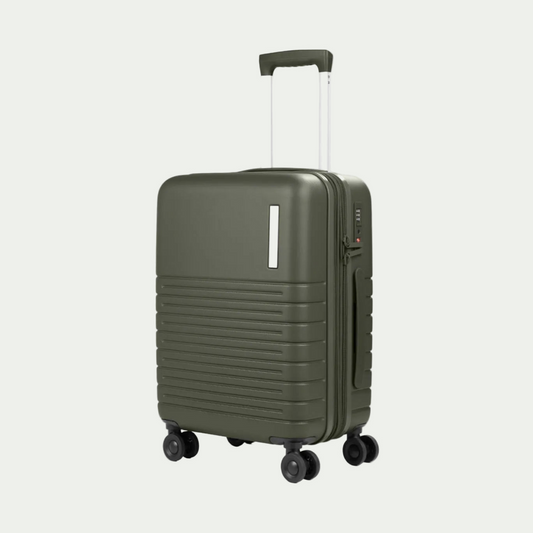
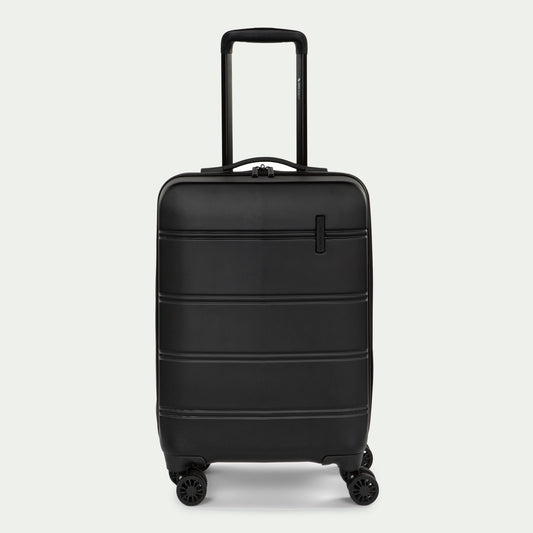
Current ÉVORA options include the Bugatti Oslo Carry-On and the Bugatti Hamburg Carry-On.
You can also compare ÉVORA carry-on luggage across the current collection.
Before buying a suitcase specifically for an upcoming flight, compare the product’s listed dimensions with the latest requirements published by your carrier.
What to check before you fly
- Measure the packed suitcase. Height, width and depth should reflect the bag you will actually take to the airport.
- Include wheels and fixed handles. Do not measure only the shell.
- Check the expansion zipper. An expanded carry-on can exceed the depth limit.
- Verify your airline’s current dimensions. Different carriers use different limits.
- Check your fare allowance. A suitcase can fit physically and still not be included with your ticket.
- Verify again shortly before departure. Airline baggage policies can change.
Airline requirements can change — always verify current requirements with your carrier before travel.
Carry-on measurement FAQ
Do wheels count when measuring a carry-on?
Yes. Measure from the bottom of the wheels to the highest fixed point of the suitcase.
Do handles count?
Fixed handles and handle housings count as part of the exterior dimensions. Measure telescopic handles while fully retracted.
Should I measure my suitcase after packing?
Yes. This is especially useful for soft-sided and expandable luggage, which can become larger once filled.
Does a 22-inch suitcase automatically qualify as carry-on luggage?
No. “22-inch” is a product description, not a universal airline standard. Compare the complete height, width and depth with your specific airline.
What should I do if my bag is exactly at the airline limit?
Pack carefully and avoid expansion or bulging pockets. A small amount of dimensional margin reduces the risk of the bag measuring larger at the airport.
Final takeaway
The correct way to measure a carry-on is straightforward:
Height: bottom of wheels → highest fixed point
Width: widest exterior point
Depth: deepest exterior point from front to back
Measure the packed suitcase, include wheels and fixed handles, and check expansion before comparing it with your carrier’s current limits.
A few minutes with a tape measure at home is much easier than discovering at the gate that the bag is oversized.
Sources and methodology
This guide was reviewed and materially updated on September 18, 2026. Time-sensitive airline examples were checked against current official baggage information published by the carriers themselves. The article focuses on measurement technique; airline-specific fare rules remain in ÉVORA’s dedicated airline guides.