Carry-On vs Checked Baggage: Which One Do You Actually Need?
Updated Oleksii PanchenkoShare
Carry-on is usually the better choice when mobility, speed and keeping your belongings with you matter most. Checked baggage makes more sense when you need substantially more capacity, are packing bulky items, or are travelling long enough that forcing everything into a cabin bag would create more friction than it removes.
Neither option is universally better. The right choice depends on your trip length, itinerary, packing volume, climate, laundry access, airline fare and how much luggage you want to move after landing.
If you are deciding what to buy, think about the trips you actually take most often—not the biggest trip you might take someday.
Carry-On vs Checked Baggage at a Glance
| Decision factor | Carry-On | Checked Baggage |
|---|---|---|
| Airport speed | No baggage drop or carousel when your fare and itinerary allow cabin-only travel | Requires bag drop and collection after arrival |
| Capacity | Limited; best when you can edit what you bring | Much more room for clothing, shoes and bulky items |
| Mobility after landing | Easier on stairs, trains, city streets and hotel changes | More cumbersome, especially with transfers |
| Access during the journey | Bag stays with you in the cabin when permitted | Unavailable after check-in until baggage claim |
| Liquids and gels | Canadian security restrictions apply | Larger toiletries can usually go in checked baggage, subject to item rules |
| Trip style | Short, mobile, multi-stop, business, minimalist | Longer, winter, formal-event, family or packing-heavy |
| Best when | You value simplicity more than extra capacity | You value capacity more than moving light |
The fastest way to decide
Use this simple rule:
- Choose carry-on when you can comfortably fit the trip into a cabin-size case without sacrificing essentials.
- Choose checked baggage when the trip requires enough clothing, footwear, liquids or equipment that cabin-only packing becomes a constant compromise.
- Choose both when you need checked capacity but still want medication, documents, electronics, valuables and an arrival-day backup with you.
The goal is not to prove that travelling lighter is always better. The goal is to remove the most friction from this particular trip.
Trip-by-trip decision matrix
| Trip | Usually the easiest starting point | Why |
|---|---|---|
| Weekend / 2–3 days | Carry-on | Enough capacity for most travellers without creating unnecessary baggage handling |
| 4–7 day city trip | Carry-on or 24" checked | Depends heavily on packing style, season and laundry access |
| 7–10 days | 24" checked or carry-on + personal item | Extra capacity becomes useful if clothing cannot be repeated or washed |
| 10–14 days | 24" or 28" checked | Longer duration increases clothing and footwear needs, but laundry access can reduce volume |
| Winter trip | Checked baggage | Coats, sweaters and boots use space quickly |
| Business trip | Carry-on + personal item | Fast airport movement plus immediate access to laptop, documents and essentials |
| Wedding / formal event | Checked baggage | Formal clothing and extra footwear often need more space and careful packing |
| Multi-city / train-heavy itinerary | Carry-on if practical | Mobility matters every time you change location |
| Family travel | Checked baggage + cabin essentials | Shared capacity is useful, while important items should remain accessible |
| Shopping-heavy return | Checked baggage or expandable capacity | Return volume may be larger than outbound volume |
When carry-on is the better choice
Carry-on works best when the suitcase helps you move more easily rather than forcing you to leave important things behind.
It is especially useful when your trip includes:
- multiple flights or connections;
- trains or public transportation;
- stairs or older buildings without elevators;
- frequent hotel changes;
- short business travel;
- a compact wardrobe that can be repeated or mixed easily.
The practical advantage is not only avoiding baggage claim. You also have fewer pieces to manage from airport to hotel and throughout the itinerary.
Carry-on works better when you have laundry access
Trip length by itself does not decide the bag. A seven-day trip with easy laundry access can require less luggage than a four-day event trip with formalwear, multiple shoes and no opportunity to wash clothes.
This is why packing advice based only on the number of days can be misleading.
When checked baggage makes more sense
Checked luggage becomes the more comfortable choice when capacity solves a real problem.
That often includes:
- cold-weather clothing;
- formal outfits;
- multiple pairs of shoes;
- larger toiletries;
- family packing;
- sports or special equipment where permitted;
- long stays without laundry access;
- trips where you expect to return with purchases.
If fitting everything into a carry-on requires extreme compression, uncomfortable outfit compromises or constant repacking, checked luggage may actually create the simpler trip.
24-inch vs 28-inch checked luggage
Once you know you need checked capacity, the next question is how much.
Choose 24-inch checked luggage when:
- you usually pack for one person;
- the trip is around a week;
- you want more space than a carry-on without moving to the largest format;
- you still expect to use trains, taxis or smaller hotel rooms;
- you want a versatile checked size for different seasons.
For many travellers, medium checked luggage gives the strongest balance between capacity and manoeuvrability.
Explore 24-inch checked luggage.
Choose 28-inch checked luggage when:
- you regularly take longer trips;
- you pack bulky winter clothing;
- you are packing for more than one person;
- the itinerary needs formalwear, equipment or several footwear options;
- maximum capacity is more important than moving compactly.
Large luggage gives you more room, but it also makes it easier to overpack. Airline checked-baggage size and weight rules still apply, so more suitcase volume does not mean unlimited packing.
Explore 28-inch checked luggage and sets.
Carry-on vs checked baggage: what about liquids?
For travellers departing through Canadian airport security, CATSA currently states that liquids, aerosols and gels in carry-on baggage generally need to be in containers of 100 mL or less and fit inside a 1 L clear, resealable bag, with certain exemptions. Larger containers generally belong in checked baggage when the item itself is permitted there.
That can make checked luggage more convenient for travellers carrying full-size toiletries or similar items. Always use CATSA’s item checker for anything you are unsure about.
Should you travel with both?
For longer trips, carry-on + checked baggage can be the most resilient setup.
The checked suitcase handles the volume. The cabin bag protects the things you should not want separated from you.
Keep these in your cabin baggage when appropriate:
- passport and travel documents;
- medication;
- electronics and chargers;
- valuables;
- essential toiletries that meet cabin rules;
- one change of clothes;
- anything you would need immediately after arrival.
This approach means a delayed checked suitcase is inconvenient rather than completely disruptive.
What size should you buy first?
If you are building a luggage setup from scratch, choose based on your most common trip pattern.
- Mostly weekends, short vacations or business trips: start with a carry-on.
- Mostly week-long trips with more outfit flexibility: start with a 24-inch checked suitcase.
- Mostly long, winter, family or high-volume trips: consider a 28-inch checked suitcase.
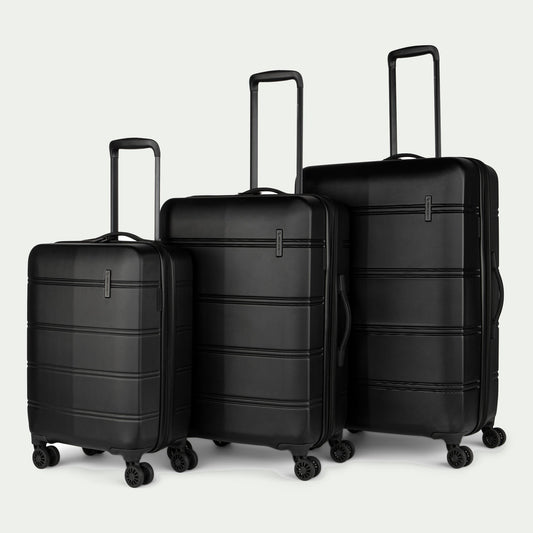
- Your travel varies significantly: a coordinated set can make sense because each size has a clear role.
If your first purchase solves 70–80% of your real trips, that is usually more useful than buying for the rare maximum-capacity scenario.
Measure before you decide
Before buying a cabin-size suitcase, do not rely only on labels such as “20-inch,” “21-inch” or “22-inch.” Use the complete exterior measurements and compare them with the airlines you fly.
Our carry-on measurement guide explains how wheels, handles, expansion and packed depth affect the final size.
For a comparison of current Canadian airline carry-on rules, see the Canadian carry-on luggage size guide.
Choosing luggage at ÉVORA
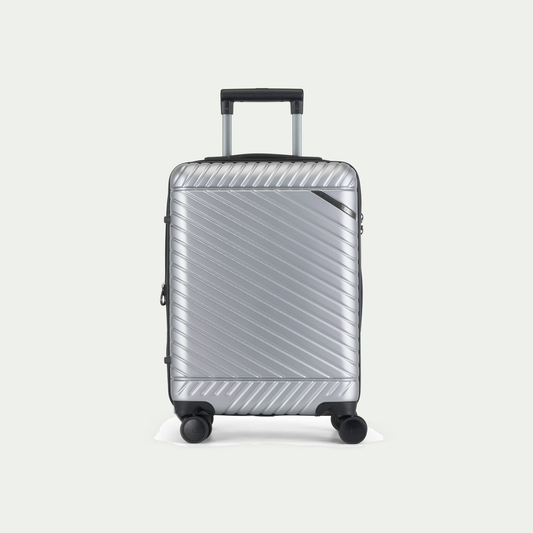
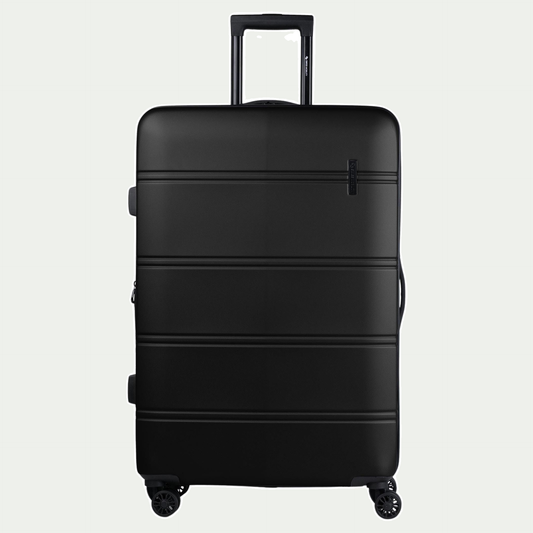
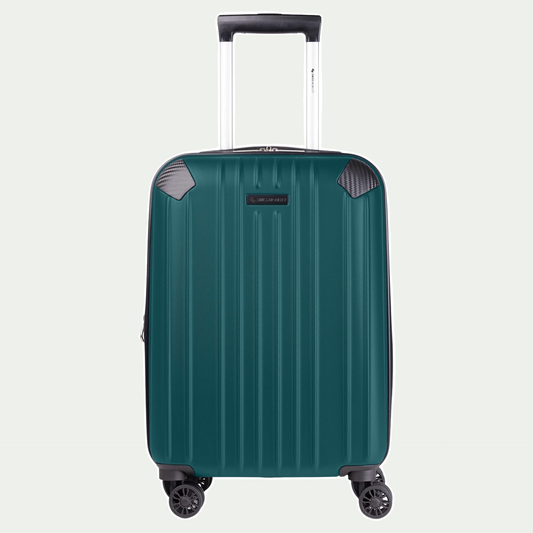
If carry-on fits the way you travel, compare ÉVORA carry-on luggage.
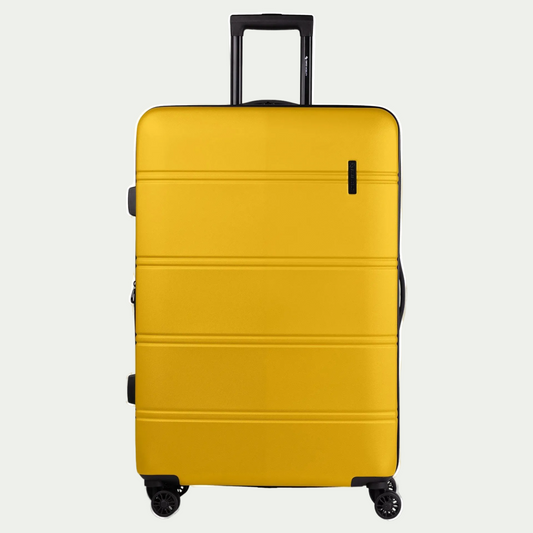
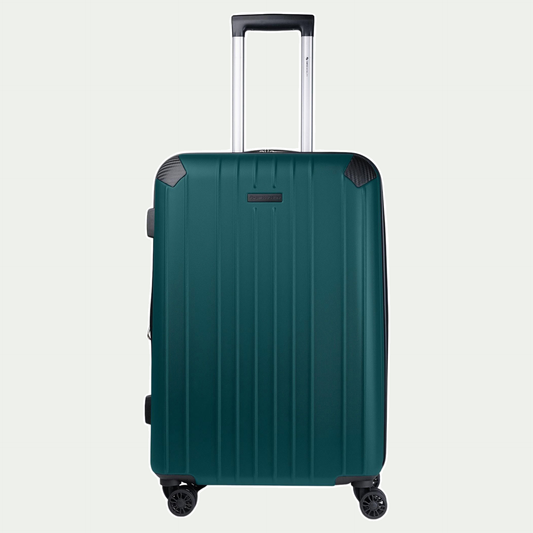
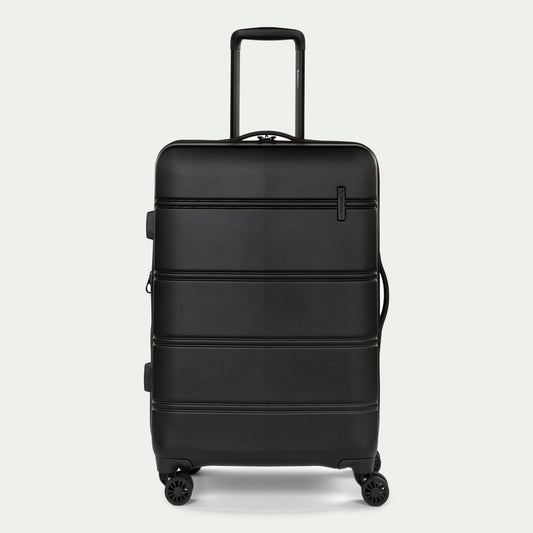
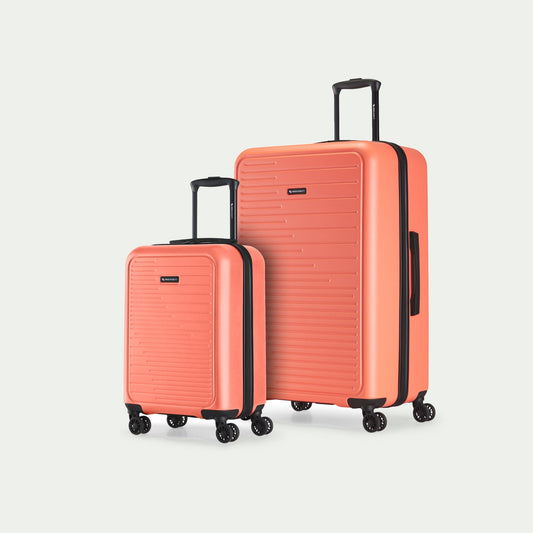
If checked capacity is the better fit, use the 24-inch collection for a more manageable medium format or the 28-inch checked luggage and sets when maximum capacity is the priority.
The best choice is the one that removes friction from your actual journey—not the one that wins a generic carry-on-versus-checked argument.
What to check before you fly
- Check the baggage allowance attached to your fare. Included baggage varies by airline, route and ticket type.
- Verify current size and weight limits. Do not assume they are the same across airlines.
- Measure carry-on luggage externally. Include wheels, fixed handles and packed depth.
- Check personal-item rules separately. A personal item has its own size and fare conditions.
- Review CATSA rules for liquids and restricted items.
- Weigh checked baggage before leaving home. Larger luggage can reach airline weight limits quickly.
Airline requirements can change — always verify current requirements with your carrier before travel.
Carry-On vs Checked Baggage FAQ
Is carry-on enough for a one-week trip?
It can be, especially in warm weather or when laundry is available. If you need bulky clothing, formalwear, several shoes or full-size toiletries, medium checked luggage may be easier.
Is a 24-inch suitcase a carry-on?
Generally no. A 24-inch suitcase is typically used as checked luggage. Always compare its complete exterior measurements with your airline’s published limits.
Is a 28-inch suitcase too large for a one-week trip?
For one traveller it may be more capacity than necessary, but it can make sense for winter travel, family packing, formal events or trips where you expect to bring more home.
Should I buy carry-on or checked luggage first?
Buy for the trips you take most often. Short-trip and business travellers often get more use from a carry-on; travellers who regularly take longer or packing-heavy trips may benefit more from checked luggage.
Can I bring both a carry-on and checked bag?
Usually yes when your fare permits it, but included baggage varies by airline, route and ticket type. Verify your booking before travel.
Final takeaway
Carry-on is best when mobility and simplicity matter most. Checked baggage is best when capacity solves a real packing problem. Using both is often the strongest setup for longer trips.
Choose based on duration, climate, itinerary, laundry access, packing volume and airline rules—not habit.
Sources and methodology
This article was materially reviewed and updated on September 23, 2026. ÉVORA treats airline baggage allowances as time-sensitive and recommends confirming the current rules directly with the carrier. Canadian security guidance in this article was checked against CATSA.