Best Luggage Size for Europe Travel: What Should You Bring?
Updated Oleksii PanchenkoShare
Europe can be one of the most rewarding places to travel — and one of the easiest places to regret bringing an oversized suitcase.
Cobblestone streets, train platforms, apartment stairs, compact hotel rooms and frequent city-to-city travel can make luggage size matter much more than it does on a simple resort vacation.
The best luggage size for Europe depends on how long you are travelling, how many destinations you are visiting and how much moving around your itinerary requires.
If you are choosing luggage for a Europe trip, start by balancing capacity with how often you will move between cities.
Here is how to choose the right suitcase before your trip.
Best Luggage Size for Europe at a Glance
| Trip Type | Recommended Luggage |
|---|---|
| Weekend or 3–4 day city break | Carry-on |
| 5–7 day trip | Carry-on or 24-inch checked suitcase |
| 1–2 week trip | 24-inch checked suitcase |
| Longer trip with multiple climates | 24-inch or 28-inch checked suitcase |
| Multi-city train trip | Carry-on or compact 24-inch suitcase |
| Family travel | Medium or large checked luggage |
If you are moving frequently between cities, it is usually better to choose the smallest suitcase that comfortably fits your needs.
Why Luggage Size Matters More in Europe
A large suitcase can feel manageable inside an airport.
That changes quickly when you are pulling it across stone streets, carrying it up narrow staircases or trying to fit it into a busy train luggage rack.
European trips often involve more transitions than other types of travel.
You may move between:
-
Airports
-
Trains
-
Metro systems
-
Buses
-
Taxis
-
Hotels
-
Apartments
-
Ferry terminals
Every transition becomes easier when your luggage is compact and easy to manoeuvre.
This is why travellers visiting several European cities often benefit from packing lighter than they normally would.
Is a Carry-On Enough for Europe?
For many travellers, yes.
A carry-on can be ideal for European city breaks and trips lasting around three to five days.
With efficient packing, it may even work for longer journeys.
A carry-on is especially practical if you:
-
Plan to travel by train
-
Are visiting several cities
-
Will use public transportation
-
Are staying in older buildings without elevators
-
Prefer travelling quickly between destinations
-
Do not want to wait for checked baggage
The biggest advantage is mobility.
You can move through crowded stations, climb stairs and navigate narrow streets much more easily with a compact suitcase.
Carry-On for a One-Week Europe Trip
A carry-on can work for one week if you pack strategically.
This is easiest when travelling during warmer months because lightweight clothing takes up significantly less space than winter layers.
Consider packing:
-
Neutral clothing that can be mixed and matched
-
One or two pairs of shoes
-
Lightweight layers
-
Clothing that can be reworn
-
Travel-size accessories
Packing cubes can help organize your suitcase and make better use of available space.
However, if you prefer having several outfit options or plan to shop during the trip, a medium checked suitcase may be more comfortable.
When a 24-Inch Suitcase Is Better
For many European trips, a 24-inch checked suitcase is the best balance between capacity and mobility.
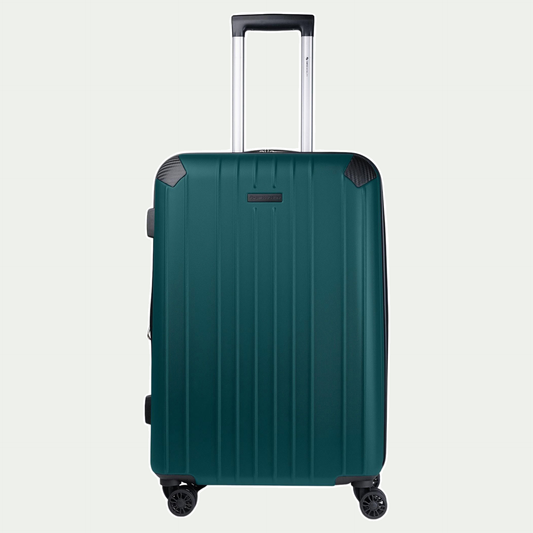
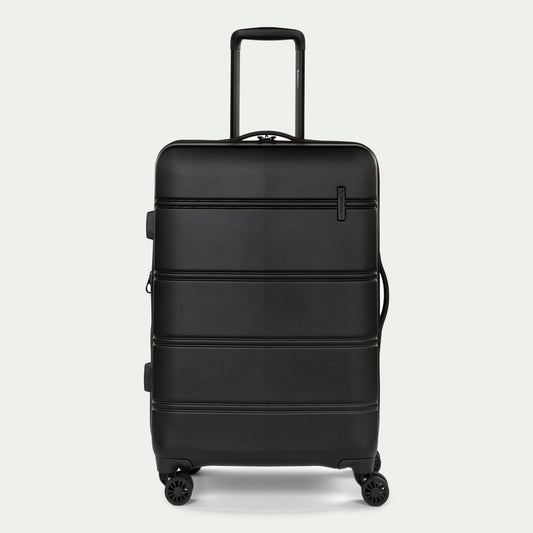
For a current medium checked option, see the Bugatti Wellington 24-inch checked suitcase.
It offers considerably more space than a carry-on while remaining easier to manoeuvre than a large checked suitcase.
A medium suitcase works particularly well for:
-
7–14 day trips
-
One traveller
-
Trips involving several outfit types
-
Shoulder-season travel
-
Light winter travel
-
Travellers who plan to shop
-
Trips where you will not move hotels every day
For many travellers, this is the most versatile checked luggage size for Europe.
It provides enough space without becoming unnecessarily difficult to move through cities and transportation hubs.
When a 28-Inch Suitcase Makes Sense
A 28-inch suitcase offers significantly more packing capacity, but it is not always the most convenient option for European travel.
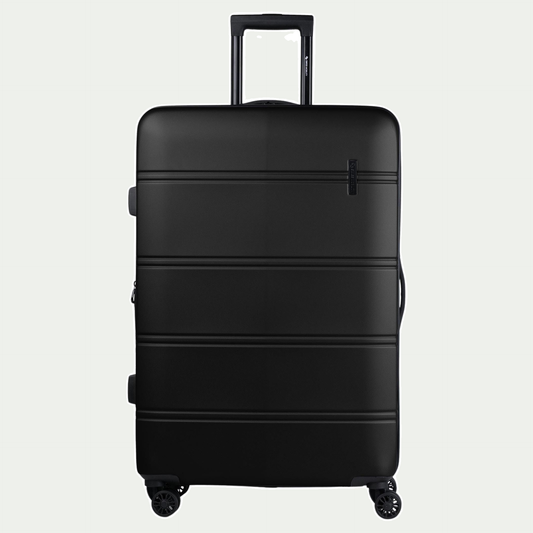
You can compare current larger options in the 28-inch checked luggage collection.
Consider a large suitcase if you are:
-
Travelling for several weeks
-
Packing for more than one person
-
Visiting Europe during winter
-
Bringing formal clothing
-
Carrying specialized equipment
-
Staying mostly in one location
-
Taking taxis or private transportation rather than trains
If your trip involves frequent city changes, a large suitcase can quickly become frustrating.
It may also be harder to store inside smaller hotel rooms, train luggage areas or apartment entrances.
For long trips, many travellers find that a medium checked suitcase plus a personal item or carry-on is easier to manage than one very large suitcase.
Best Luggage Size for European Train Travel
Train travel is one of the best ways to move around Europe, but it rewards lighter packing.
Unlike flying, you often handle your own luggage from beginning to end.
That may mean lifting your suitcase:
-
Onto the train
-
Into storage racks
-
Up station stairs
-
Across platforms
-
Through narrow train aisles
For this reason, a carry-on or medium suitcase is generally easier to manage than a large checked case.
If your itinerary includes several train journeys, prioritize mobility over maximum capacity.
A suitcase with smooth spinner wheels and a comfortable telescopic handle can also make a significant difference.
Best Luggage Size for European City Breaks
For trips to cities such as Paris, Rome, Amsterdam, Lisbon, Prague or Barcelona, a carry-on is often enough.
City breaks usually involve shorter stays and more walking.
A smaller suitcase makes it easier to:
-
Take public transit
-
Navigate busy streets
-
Store luggage in a hotel room
-
Move between accommodations
-
Travel quickly after arrival
If the trip lasts less than one week, bringing a large suitcase is often unnecessary unless you have specific packing needs.
Best Luggage Size for Winter Travel in Europe
Winter changes the equation.
Coats, sweaters, boots and thermal layers take considerably more space than summer clothing.
For a winter trip lasting one week or longer, a 24-inch checked suitcase may be more realistic than a carry-on.
A 28-inch suitcase can be useful for longer winter trips, but remember that bulky clothing also adds weight.
Wearing your heaviest coat and shoes during travel can help reduce how much space and weight your luggage requires.
Best Luggage Size for a Two-Week Europe Trip
For most travellers, a 24-inch checked suitcase is an excellent choice for a two-week European trip.
It gives you enough room for clothing and essentials without becoming excessively bulky.
You do not necessarily need fourteen completely different outfits.
If laundry is available during the trip, packing for approximately one week and washing clothing once can dramatically reduce the amount of luggage you need.
This is particularly useful for multi-city trips.
What About Low-Cost Airlines in Europe?
If your itinerary includes European low-cost airlines, pay close attention to baggage rules.
Cabin baggage allowances can vary significantly between airlines and fare types.
A suitcase that qualifies as carry-on baggage with one airline may require an additional fee or checked baggage purchase with another.
Before travelling, verify:
-
Maximum cabin bag dimensions
-
Personal item dimensions
-
Weight limits
-
Whether your fare includes cabin luggage
-
Checked baggage fees
Airline requirements vary — always verify baggage dimensions and weight allowances directly with your carrier before travel.
Hard Shell or Soft Shell for Europe?
Both can work well.
Hard shell luggage is a strong option if you want:
-
Better protection against compression
-
An easy-to-clean exterior
-
A structured suitcase
-
Protection for fragile items
Soft shell luggage may be preferable if you want:
-
Exterior pockets
-
Slightly more packing flexibility
-
Easy access to travel essentials
For frequent train travel and city movement, the quality of the wheels and handle may matter just as much as the shell material.
Should You Bring One Large Suitcase or Two Smaller Bags?
For solo travellers, one medium suitcase is usually easier than multiple pieces of luggage.
Managing several bags on trains and public transportation can become inconvenient.
However, for couples or families, two medium suitcases may be easier to handle than one extremely heavy large suitcase.
It also helps distribute weight more evenly.
The goal is not simply to maximize capacity.
The goal is to choose luggage you can comfortably lift, roll and manage throughout the entire journey.
The Best Luggage Size for Europe: Final Recommendation
For most travellers:
Choose a carry-on for short city breaks, minimalist travel and trips involving frequent train journeys.
Choose a 24-inch checked suitcase for one- to two-week trips when you want additional packing space without sacrificing too much mobility.
Choose a 28-inch suitcase for longer stays, winter travel, family packing or trips where you will remain in one place for most of the journey.
For a typical multi-city European vacation, a carry-on or medium checked suitcase is usually the most practical choice.
Europe rewards travellers who pack thoughtfully.
The easier your luggage is to move, the easier the entire journey becomes.
Frequently Asked Questions
What size suitcase is best for a 10-day Europe trip?
A 24-inch checked suitcase is a strong option for most travellers. Minimalist packers may be able to use a carry-on, especially during warmer months.
Is a 28-inch suitcase too big for Europe?
Not necessarily, but it can be inconvenient for train travel, public transportation and multi-city itineraries. It is better suited to longer stays or trips with fewer accommodation changes.
Can I travel Europe with only a carry-on?
Yes. Many travellers use only carry-on luggage, particularly for shorter trips or multi-city itineraries. Strategic packing and access to laundry can make carry-on travel much easier.
What luggage is best for European trains?
A carry-on or medium suitcase is generally easier to manage because you may need to lift and store your own luggage on trains.
Is hard shell luggage good for Europe?
Yes. Hard shell luggage can be particularly useful for checked baggage and frequent travel because it provides structure and protection. Good wheels and a reliable handle are also important for city travel.
What suitcase should I take for two weeks in Europe?
For most travellers, a 24-inch checked suitcase provides a good balance between packing space and mobility. A larger suitcase may be useful for winter trips or travellers with heavier packing needs.